A 40-yard roll-off container represents the maximum transportable bulk capacity allowed under Texas Department of Transportation road regulations for single-unit trucks. Standing 8 feet tall, 22 feet long, and 8 feet…
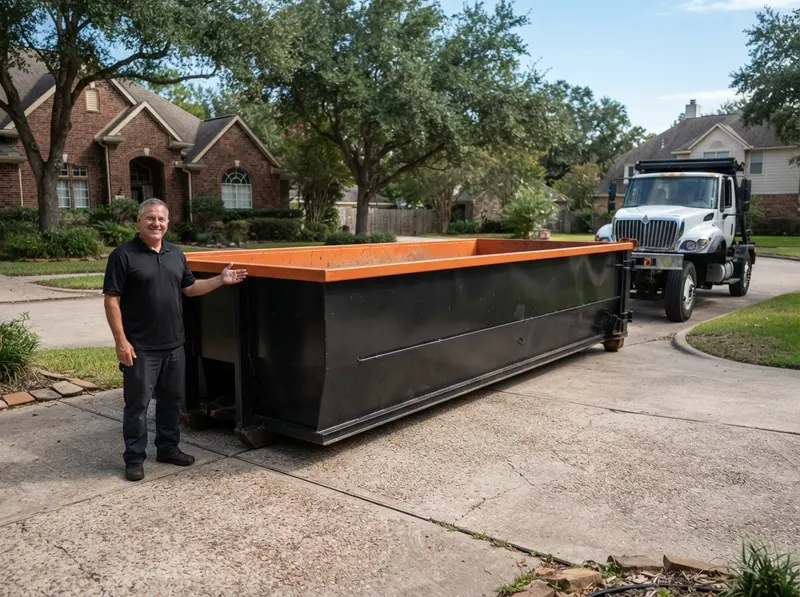
A 40-yard roll-off container represents the maximum transportable bulk capacity allowed under Texas Department of Transportation road regulations for single-unit trucks. Standing 8 feet tall, 22 feet long, and 8 feet wide, this steel container fits large-scale structural teardowns, comprehensive industrial refits, and multi-room commercial restorations. While a 30-yard dumpster suits estate cleanouts or partial roofing removals, the 40-yard box handles high-volume framing debris, multi-family window retrofits, and total teardown material where continuous debris containment prevents municipal violations. Loading high-volume cargo requires open rear swinging doors; operators roll carts directly inside rather than throwing material over an 8-foot sidewall. Due to state axle limitations, dense inert fill such as broken concrete, packed clay, or dirt must not be loaded to full volume, as road weight caps set by safety guidelines mandate lower thresholds for masonry items to protect logistics equipment and pavement structures.
Placement operations demand 60 feet of direct straight-line clearance and 25 feet of overhead line clearance for the mechanical hoist to elevate the rail frame. Roll-off drivers use heavy timber cribbing under steel wheels to safeguard concrete pads, asphalt approaches, and stamped stone drives from point-load fractures. Staging inside compact Houston urban layouts requires specific logistical coordination. In historic settings such as The Heights, Montrose, and the East End (Second Ward), shallow street cuts and low-hanging heritage oak branches require pre-trip clearance verifications to position the footprint without blocking municipal easements. For projects within River Oaks, West University Place, and Memorial, strict homeowners associations impose active code deadlines and specific container parking parameters that rule out protracted public right-of-way street drops. When placement must occur on an open public thoroughfare, contractors must verify permitting rules via the City of Houston public works division or coordinate drop zones strictly within private site perimeters to avoid non-compliance citations.
Industrial sites along Highway 225, commercial re-developments near The Galleria and Texas Medical Center, and residential rebuilds in Meyerland, Garden Oaks, Oak Forest, and Clear Lake maintain tight production schedules where unattended overflow invites safety hazards and jobsite code penalties under OSHA jobsite safety standards. Unsorted scrap timber, metals, and standard solid materials flow directly through local recovery frameworks guided by the Texas Commission on Environmental Quality, reducing the mass sent to municipal landfills. Hazardous chemicals, industrial solvents, refrigerants, wet paint, biological debris, and lead-acid batteries are banned under strict environmental statutes monitored by the US EPA. For specialized chemical disposals, project managers must utilize regional collection days coordinated through the Harris County Precinct 1 environmental divisions or reference certified processing networks tracked by Earth911. For building deconstruction documentation, project teams reference materials standards through the ASTM International recycling protocols and safe industrial trucking specifications maintained by the Federal Motor Carrier Safety Administration and industrial equipment baselines from the National Safety Council.
Direct dispatcher coordination eliminates the intermediary confusion associated with programmatic listing brokers. SummitHaul Container Co. quotes flat, all-inclusive pricing so contractors can account for waste budgets reliably on corporate manifests. Call (713) 234-4128 to confirm access paths, gate widths, and delivery timing with our central Houston dispatch desk.
Every job gets a firm, written price after a free on-site visit.
For standards, safe disposal, and service guidance on DUMPSTER in Houston, TX, useful references include U.S. EPA, EPA, EPA, OSHA, Earth911, and Google Maps. General consumer and small-business resources are available from USA.gov, Better Business Bureau, FTC Consumer Advice, U.S. Small Business Administration, and Ready.gov.
Tell us about your 40-yard dumpster job in Houston and we'll send a clear, written quote, usually the same day.
 SummitHaul Container Co.